Real Estate Lead Qualification With AI Voice Assistants and Automated Workflows
Real estate investors rarely lose deals because they never found enough names. More often, they lose deals in the messy middle, after a lead comes in and before a real conversation happens. A seller calls while your acquisitions manager is on another line. A text reply lands at 8:47 p.m. And sits unanswered until morning. A PPC lead fills out a form, but no one calls back for three hours. By then, the seller has already spoken with two competitors.
That gap is where real estate AI earns its keep, not as a novelty, but as an operational tool. For investors running inbound and outbound marketing, whether they are pursuing motivated seller leads through PPC, SEO, cold calling, or SMS marketing for real estate investors, the first job is not simply generating more lead volume. It is qualifying quickly, routing correctly, and following up consistently.
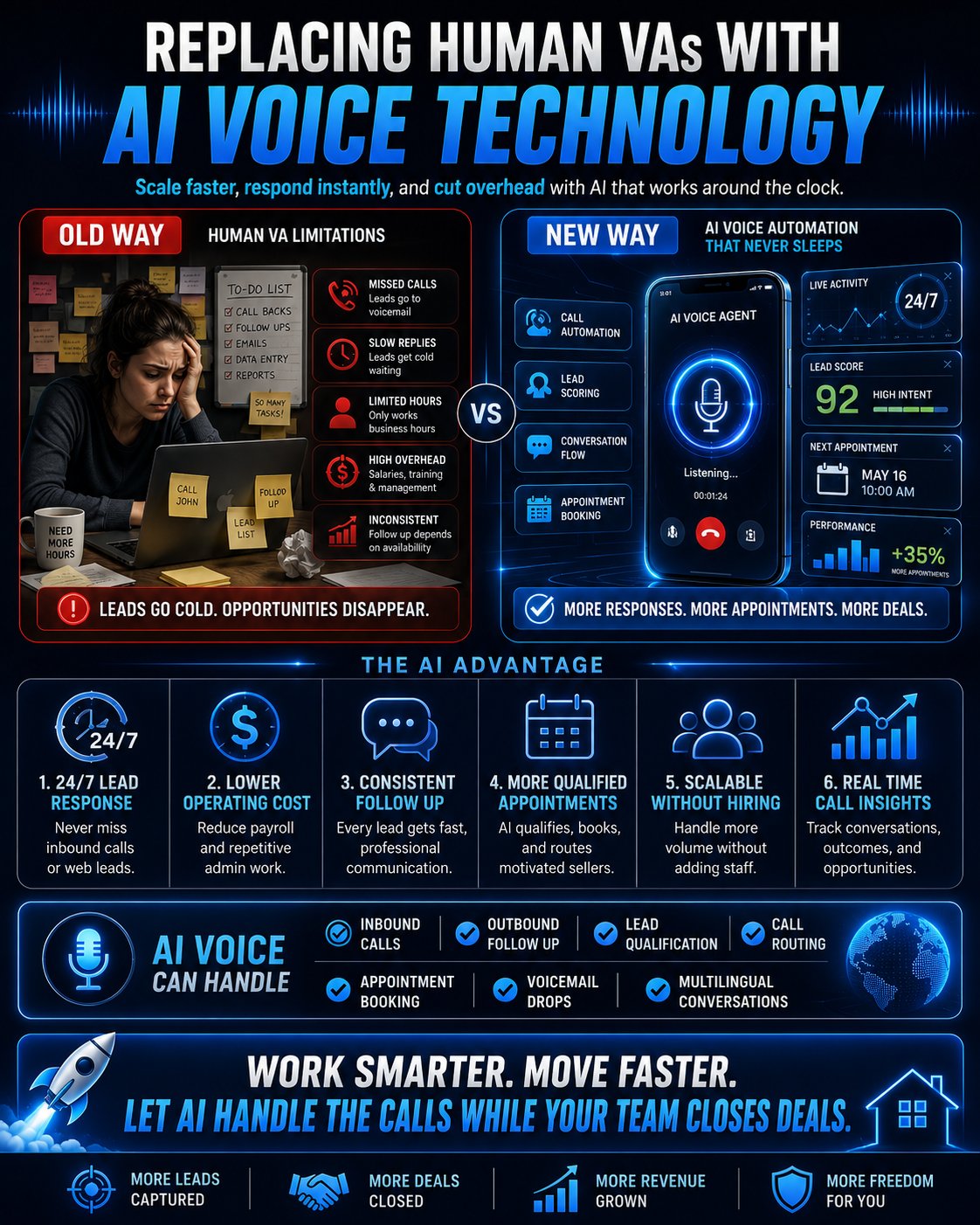
The practical promise of voice AI for real estate investors and automated workflows is straightforward. A system can answer calls, respond to messages, collect basic seller information, book appointments, and keep follow-up moving when the team is unavailable. That matters because speed and consistency are hard to maintain manually, especially once campaigns start working.
REI Reply is one example of how this category has matured. It positions itself as a real estate investor CRM and follow-up system built specifically for real estate investors, with inbound and outbound calling, SMS, missed-call text back, and AI voice assistants in one platform. It is aimed at wholesalers, fix-and-flippers, buy-and-hold investors, and acquisitions teams. Just as important, it is not presented as a lead provider in the traditional sense, but as a conversion engine for leads investors are already generating, while also offering access to verified motivated seller data through REI AI Leads. That distinction matters because lead generation and lead conversion are different problems, and many teams blur them at their own expense.
Why qualification breaks down in real investor operations
Most investor follow-up systems fail in predictable ways. The scripts are too generic. The CRM becomes a storage bin instead of a working pipeline. Texting goes out in bursts, then stops when the team gets busy. Calls are missed, and nobody owns the callback. Lead tags are inconsistent, so managers cannot tell who is hot, who is stale, and who should never be touched again.
That is why conversations about AI for real estate investors should start with workflow discipline, not software features. If your process is vague, automation just makes the vagueness happen faster. If your process is clear, real estate automation can remove the friction that causes deals to leak out of the funnel.
A motivated seller lead does not need a perfect first conversation. It needs a timely one. In many cases, a seller is simply deciding whether to keep talking. They are judging responsiveness, professionalism, and whether the person on the other end seems capable of helping. An AI voice agent or real estate AI receptionist can handle that first layer well if it is designed to gather useful information, set expectations properly, and know when to hand the conversation to a human.
I have seen teams spend heavily on real estate lead generation, then undermine the spend with weak seller lead follow up. They chase new off market property leads while older inbound leads sit untouched in the CRM for days. That habit is expensive. The easiest lead to waste is the one you already paid to acquire.
What good lead qualification actually captures
Lead qualification in real estate acquisitions does not need to feel complicated. It does need to be consistent. Whether the first touch happens by phone, automated SMS, or a form response, the goal is https://archerlxip722.laurelcurrent.com/posts/real-estate-sms-marketing-for-investors-what-to-know-about-automation-and-compliance to answer a small set of business-critical questions that help the acquisitions team prioritize.
A useful qualification layer usually captures:
- The property and who owns it, enough to verify what the seller is calling or texting about.
- The seller’s situation, including why they may want to sell and how soon they hope to act.
- The preferred next step, such as a callback, an appointment, or continued text follow-up.
- The right level of urgency, so the hottest real estate acquisition leads rise to the top quickly.
- Basic contact and communication preferences, which matter for both conversion and compliance.
That may sound obvious, but many real estate sales pipeline problems come from skipping these basics. Teams often collect fragments of information across several channels, then expect an acquisitions rep to reconstruct the story later. A disciplined AI lead management workflow reduces that cleanup. If the first interaction captures the essentials in a structured way, seller lead automation becomes far more useful.
Where AI voice assistants fit, and where they do not
A lot of people hear "AI voice agent" and imagine a machine replacing the acquisitions desk. That is usually the wrong frame. In a serious operation, the AI real estate assistant handles repeatable front-end tasks so humans can spend more time on judgment-heavy conversations.
For example, if a seller calls after hours, the system can answer immediately, collect the reason for the call, identify the property, and schedule a callback or appointment. If an inbound lead comes from real estate prospecting or text message marketing real estate campaigns, the voice layer can respond without waiting for office hours. If someone calls and hangs up, missed-call text back can reopen the conversation before it cools off.
That kind of real estate call automation is useful because seller intent does not arrive on your staffing schedule. Serious sellers call during lunch breaks, while driving, after work, and on weekends. A human team cannot cover every moment without waste. Automated lead qualification can.
Still, there are limits. A distressed seller lead with a sensitive probate situation, a family dispute, or a complex title issue may need a human earlier in the process. A voice assistant can start the intake, but it should not force every lead through the same script when nuance matters. Good systems create a cleaner handoff. They do not pretend every conversation can be fully automated.
That trade-off is where experienced operators separate hype from utility. The best use of AI lead follow up is not to sound clever. It is to shorten response times, standardize intake, and make sure a qualified human steps in at the right moment.
Automated workflows are the real multiplier
Voice alone is not the story. The larger gain comes from tying voice, SMS, lead records, and follow-up logic together inside real estate investor software. When those parts live in different tools, teams end up with duplicate notes, missed reminders, and patchy communication. When they work in one system, the process becomes easier to trust.
This is one reason investor-specific platforms have traction. REI Reply, for instance, combines calling, SMS, missed-call text back, lead management, automated follow-up, and AI voice assistants in one environment, while also advertising workflow features such as AI seller conversations, Spintax, and text-deliverability-oriented messaging features. For teams juggling seller leads across channels, that all-in-one structure can reduce the operational drag that comes from stitching multiple apps together.
The key phrase there is can reduce. No platform fixes unclear ownership or poor process by itself. If your acquisitions team does not agree on lead stages, if no one defines what counts as a qualified seller, or if follow-up sequences are written like canned spam, even the best CRM for real estate investors will disappoint. Real estate follow up automation works when it reflects an intentional sales process.
A good workflow often looks less glamorous than people expect. A new lead comes in. The system responds immediately. It logs the source, contact details, and conversation summary. Based on what the seller says, it tags the lead by urgency and routes it to the right queue. If the person is not ready to talk now, automated SMS or call follow-up continues at reasonable intervals. If the lead reaches a threshold, a human gets notified to step in. If the seller asks not to be contacted, the system suppresses future outreach.
That is not flashy. It is effective.
Speed to lead still wins, but consistency closes more deals
Real estate investor leads are often discussed as if they were all alike. They are not. Some are high-intent inbound leads from search traffic. Some are responses to real estate investor texting campaigns. Some come from cold outreach based on property owner data, real estate skip tracing, or bulk skip tracing. Some sellers are ready now. Others are months away. Your follow-up system has to respect that range.
Speed matters most on the front end. If someone fills out a form saying they want to sell an off market property, a quick response can be the difference between a conversation and a dead lead. But consistency matters over the long haul because many sellers do not move on the first touch. They think about it, disappear, resurface, and respond unpredictably. That is where automated seller follow up and lead nurturing real estate workflows shine.
I have watched teams overvalue the first call and undervalue the next twenty touches. A seller who says, "Not right now," is not always a bad lead. Sometimes they simply need time, and they reward the investor who stays present without becoming annoying. That takes rhythm, not random reminders. Real estate follow up system design is part timing, part messaging, and part restraint.
This is where real estate SMS automation has a practical role. SMS follow up works because it meets people where they already are, on their phones, in short bursts of attention. But it has to be governed carefully. Generic blasts may create activity, but they often produce poor conversations. Better seller text messaging feels relevant to the prior interaction, the property, and the seller’s stage.
SMS, deliverability, and why compliance cannot be an afterthought
A lot of real estate text marketing falls apart because investors focus on volume before compliance and deliverability. That is backwards. If your messages do not reach the recipient, or if your process ignores the rules, the campaign becomes fragile fast.
For U.S. Business texting, A2P 10DLC is the carrier standard for application-to-person SMS traffic sent through 10-digit long code numbers. The point is verification and consensual messaging. In plain terms, if you want sustainable real estate SMS marketing, you need to treat registration, consent, and message quality as foundational, not optional.
The same principle applies to calls. The FTC says telemarketers must honor Do Not Call rules and generally may not call outside 8 a.m. To 9 p.m. Local time without prior consent. It also states that prerecorded telemarketing calls require prior signed, written agreement, and that electronic consent can satisfy the requirement when it meets E-SIGN standards. Those are not side notes for the legal department. They should shape the architecture of your workflows from the beginning.
A practical compliance baseline includes:
- Maintain processes to honor Do Not Call obligations, including entity-specific requests.
- Respect calling-time limits based on the recipient’s local time unless proper consent changes the picture.
- Treat prerecorded telemarketing calls with extra care because written agreement requirements apply.
- Build consent tracking into your CRM so your team is not guessing later.
- Use A2P 10DLC and related SMS compliance practices to support deliverability and verified messaging.
There is another operational point here that often gets missed. Compliance is not only about avoiding penalties. It improves campaign quality. Teams that keep cleaner consent records, suppress the wrong contacts, and manage real estate texting compliance deliberately usually see better text message deliverability and less wasted spend. Better inputs create better outputs.
The role of data in qualification
Real estate lead qualification gets easier when the contact record is stronger before the first conversation starts. That is why skip tracing for real estate investors, property owner lookup, and broader real estate lead data practices matter. If you can connect the seller to the right property and the right contact information early, you reduce confusion and wasted touches.
Still, property data and motivated seller data should be seen as context, not truth. Data tells you where to start the conversation. It does not replace the conversation. A list can suggest possible distress, absentee ownership, or off market data patterns, but only the seller can confirm intent, timing, and motivation.
That is one reason REI Reply’s positioning as a conversion engine is sensible. Even with access to verified motivated seller data through REI AI Leads, the harder part is still what happens after a lead exists. Seller lead generation and seller lead follow up are connected, but they are not the same discipline. One finds opportunity. The other turns it into a real pipeline.
How acquisitions teams should measure success
A common mistake in AI real estate investing discussions is using the wrong scorecard. Teams fixate on how many calls the bot handled or how many texts went out. Those numbers can be useful, but they are not the business outcome.
A better lens asks whether the system improved contact rate, reduced time to first response, increased appointment setting, and made the pipeline easier to manage. It should also reveal whether the team is spending more human time on qualified conversations and less time on repetitive admin.
That is why the CRM layer matters so much. A motivated seller CRM should not merely store notes. It should make real estate lead management visible. Which channels create conversations? Which lead sources create appointments? How many seller leads move from initial contact to actual acquisition review? Where does follow-up stall? Without that visibility, even sophisticated real estate marketing automation becomes guesswork.
Investor operators should be careful, though, about attributing every gain to technology. Sometimes what looks like an AI win is really a process win. The script got tighter. The intake form improved. The handoff rules became clearer. The team started calling faster. In practice, that distinction does not matter much as long as the operation improves. But it matters a great deal when you try to replicate results.
Practical deployment advice for investors
If you are considering AI tools for real estate investors, start smaller than your ambition. Pick one acquisition lane, one lead source, and one business objective. Maybe it is after-hours inbound call capture for motivated seller calls. Maybe it is automated SMS for web leads that do not answer the first callback. Maybe it is a real estate AI receptionist for missed-call text back and appointment booking.
Then pressure-test the workflow. Listen to how the system handles normal, awkward, and emotional responses. Make sure it captures information the acquisitions team actually uses. Watch where conversations break. Tighten the routing logic. Review compliance settings before scaling anything.
There is also a cultural piece here. Teams adopt automation more successfully when they understand that the goal is not fewer human conversations. The goal is better human conversations. If the AI phone agent real estate setup simply creates more noise for your acquisitions reps, it is not helping. If it sorts, summarizes, and advances the right leads, it is.
One experienced acquisitions manager once told me that his best automation decision was not the sequence itself. It was forcing the team to define what "hot" meant. That is the kind of boring clarity that makes seller lead automation work. Without it, even a polished AI real estate CRM becomes another inbox.
Where this is headed for investors
The direction is clear even if the category language gets noisy. Real estate investor automation is moving toward tighter integration between voice, texting, lead records, and pipeline actions. Investors do not want five tools and three disconnected logs. They want one operating system that helps them prospect, respond, qualify, and follow up without losing context.
That is why platforms that combine inbound and outbound calling, SMS, AI follow up, lead management, and workflow automation are getting attention. For wholesalers, fix-and-flippers, buy-and-hold investors, and acquisitions teams, the operational pain is not abstract. It is the missed call, the stale lead, the forgotten callback, the text that never got a reply, and the appointment that was never booked.
Real estate acquisitions still depend on trust, timing, and negotiation. No software changes that. What real estate AI can change is the gap between interest and action. When the system responds fast, captures the right details, respects compliance, and keeps follow-up moving, the team gets more chances to do the part only people can do well.
That is the real value of AI lead qualification in this business. Not magic, not replacement, and not a shortcut around fundamentals. Just a better way to make sure real opportunities do not slip through your hands while your team is busy doing the work that actually closes deals.